
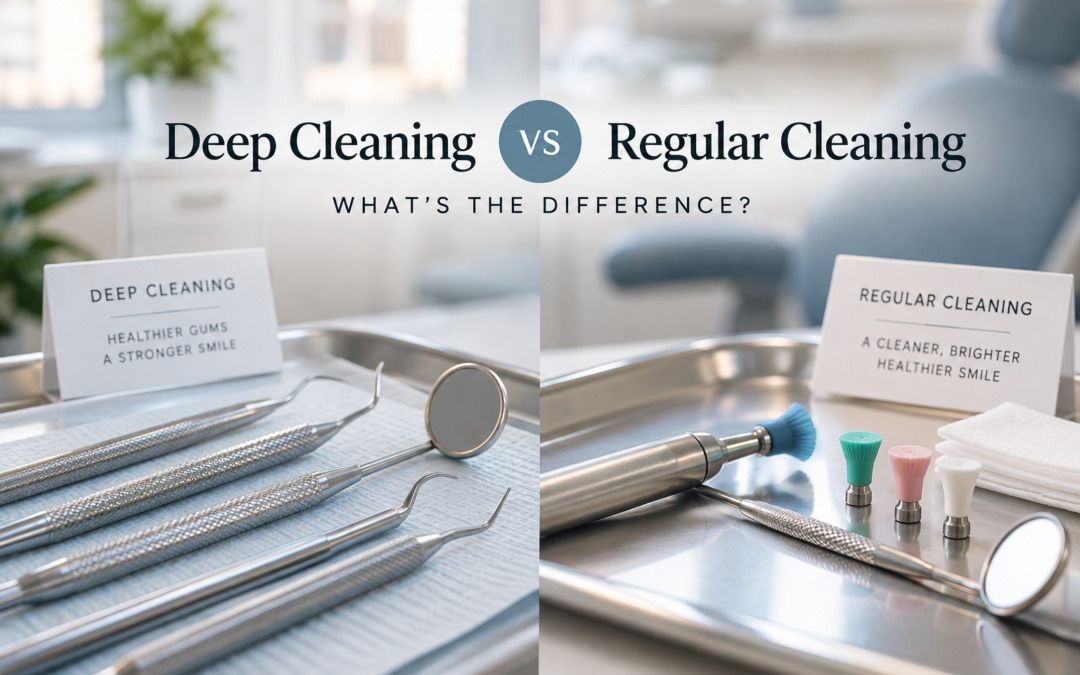
If your dentist has ever told you that you need a deep cleaning instead of a regular one, it is completely normal to feel confused or even a little skeptical. Most people assume all dental cleanings work the same way. They do not.
The difference between a routine dental cleaning and a deep cleaning comes down to one thing: the health of your gums. Not how often you brush. Not how long it has been since your last visit. Understanding that distinction makes it a lot easier to feel confident about your care.
What Is a Regular Dental Cleaning?
A regular dental cleaning, called a prophylaxis in clinical terms, is the cleaning most patients schedule every six months. It is designed for people with healthy gums and minimal buildup.
During the appointment, your dental hygienist removes plaque and tartar from the surfaces of your teeth and from just above the gumline. Your teeth are then polished to clear away surface stains. The whole visit usually takes 30 to 60 minutes, and no anesthesia is needed.
The purpose is prevention. Regular cleanings stop problems before they start by keeping bacteria from building up below the gumline. Our dental cleaning in Woodbridge, VA is a good starting point if you are overdue for a visit or looking for a new office.
What Is a Deep Cleaning?
A deep cleaning, clinically known as scaling and root planing, is not a routine appointment. It is a targeted treatment used when gum disease is already present and bacteria have spread below the gumline.
The procedure has two stages. Scaling removes hardened tartar from inside the gum pockets, in areas a regular cleaning cannot reach. Root planing smooths the surfaces of the tooth roots so your gums can reattach and heal properly.
Because the full mouth is treated in two visits, usually one side at a time, local anesthesia is used to keep you comfortable throughout. Our gum disease treatment in Woodbridge, VA includes scaling and root planing along with Arestin antibiotic therapy placed directly into gum pockets when needed.
Dental Cleaning vs Deep Cleaning: At a Glance
The two procedures serve completely different purposes. Here is how they compare side by side.
|
Regular Cleaning |
Deep Cleaning |
|
|
Purpose |
Preventive |
Treats active gum disease |
|
Where it cleans |
Above the gumline |
Below the gumline, into pockets |
|
Who it is for |
Healthy gums |
Active gum disease present |
|
Anesthesia |
Not needed |
Local anesthesia used |
|
Duration |
30 to 60 min, 1 visit |
45 to 60 min x 2 visits |
|
Frequency |
Every 6 months |
Followed by 3 month maintenance |
|
Cost |
Usually covered in full |
Partially covered by most plans |
The Real Difference: Your Gum Pocket Depth
The factor that determines which cleaning you need is not how dirty your teeth look. It is the depth of your gum pockets.
At every exam, your dentist or hygienist uses a small probe to measure the space between your gums and the base of each tooth. Healthy pockets measure 1 to 3 millimeters. When pockets reach 4 millimeters or deeper, especially with bleeding or signs of bone loss, gum disease is present. That is when a deep cleaning becomes necessary.
This measurement is not a judgment call. It is a clinical finding based on probe readings and X-rays. At Woodbridge Comfort Dental Care, our preventive dentistry team includes thorough gum measurements at every visit so any changes are caught early, before they require more involved treatment.
Signs You Might Need a Deep Cleaning
Gum disease is often painless in the early stages, which is why most people do not know they have it until a dentist measures their pockets at an exam. That said, there are warning signs worth paying attention to.
You may need a deep cleaning if you notice any of the following:
- Bleeding when you brush or floss
- Persistent bad breath that does not go away with brushing
- Gums that look swollen, puffy, or darker red than usual
- Gum recession, where your teeth look longer than they used to
- Tooth sensitivity near the gumline
- A long gap since your last dental cleaning
These signs do not necessarily mean serious damage has already occurred. They mean it is worth getting an evaluation sooner rather than later. The earlier gum disease is caught, the easier it is to treat.
Is a Deep Cleaning Really Necessary, or Just an Upsell?
This is one of the most common questions patients ask, and it is a completely fair one. The short answer is that a deep cleaning treats a bacterial infection that a regular cleaning is not designed to address.
When tartar and bacteria build up below the gumline and inside deep pockets, brushing, flossing, and routine cleanings cannot remove it. A regular cleaning works at and above the gumline. A deep cleaning goes below it. The two procedures are not interchangeable.
Skipping a recommended deep cleaning does not make the infection go away. Without treatment, pockets continue to deepen, bone loss progresses, and teeth can eventually loosen or need to be removed. Treating gum disease early is significantly less expensive and less complicated than managing the damage later.
Your dentist’s recommendation is based on your gum pocket measurements and X-rays, not guesswork. If you want a second opinion, that is a completely reasonable thing to ask for.
Disadvantages of Deep Cleaning Teeth
Deep cleaning works, but going in knowing what to expect makes the experience much easier. There are real downsides to the procedure, and being upfront about them is more useful than glossing over them.
Sensitivity after treatment. Your gums and tooth roots will feel tender for a few days following the procedure. Sensitivity to hot and cold foods is common and usually fades within one to two weeks.
Temporary gaps between teeth. Inflamed gum tissue appears larger than healthy tissue. As your gums heal and the swelling goes down after treatment, teeth may look slightly more spaced. This is a normal part of healing, not damage to your teeth.
Two appointments instead of one. Deep cleaning is done in two visits, typically one side of the mouth per appointment. It takes more time and more scheduling, but splitting the treatment allows for better anesthesia and a more thorough result.
Higher cost than a regular cleaning. Deep cleaning costs more than a routine visit. Most dental insurance plans cover scaling and root planing partially when a gum disease diagnosis is on file.
Mild discomfort during the procedure. Local anesthesia is used, so most patients feel pressure rather than pain. Some post-procedure soreness is normal and manageable with over the counter pain relievers.
These are temporary side effects. The consequences of untreated gum disease, including permanent bone loss and tooth loss, are not.
Does a Deep Cleaning Hurt?
The procedure itself should not be painful. Local anesthesia is applied before scaling begins, so most patients feel pressure rather than pain during the appointment.
After the visit, you can expect some soreness and gum tenderness for two to five days. Over the counter ibuprofen or acetaminophen works well for managing discomfort. Sensitivity to cold temperatures may linger for a short time while the root surfaces settle.
If you experience severe pain or discomfort that lasts longer than a week, contact your dentist. That level of symptoms is not typical after a routine deep cleaning.
What to Expect After a Deep Cleaning
For the first day or two, your gums will feel tender and may bleed lightly when you rinse. This is expected. As the tissue heals and inflammation goes down, you may notice your teeth look slightly more spaced. That is a sign your gums are returning to a healthy size after the swelling resolves.
What to Eat After a Deep Cleaning
For the first 24 to 48 hours, focus on soft foods that do not require a lot of chewing. Good options include yogurt, soup, mashed potatoes, scrambled eggs, and smoothies. Avoid hard, crunchy, spicy, or very hot or very cold foods during this time. Hold off on alcohol for at least 24 hours as well.
Maintenance After Deep Cleaning
A deep cleaning resets the environment so your gums can heal. It is not a permanent fix on its own. Most patients return every three months for periodontal maintenance visits following the procedure. These appointments monitor healing, remove any new buildup, and prevent bacteria from rebuilding inside the pockets.
Once your gum health is stable and pocket depths return to a healthy range, your dentist may clear you to go back to regular six month cleanings. Many patients reach that point. Others need ongoing three month maintenance to keep gum disease in remission long term.
Can You Go Back to Regular Cleanings After a Deep Cleaning?
In many cases, yes. If your gum pocket depths return to a healthy range and your tissue heals well, your dentist may transition you back to routine six month cleanings over time.
This does not happen automatically. Your dentist will remeasure your pockets at follow up visits to track how healing is progressing. Some patients stabilize within a year or two and return to regular care. Others need ongoing three month periodontal maintenance to keep gum disease in remission.
The right maintenance schedule is the one that keeps your gums healthy over the long term.
Ready to Find Out What Your Gums Need?
Whether you are due for a routine cleaning or you have been told you need a deep cleaning and want to understand more about what that means, the right next step is a thorough exam. At Woodbridge Comfort Dental Care, we take gum pocket measurements, review your X-rays, and walk you through exactly what we find so you always know what is going on and why.
Our team offers preventive dentistry in Woodbridge, VA focused on catching problems early and making sure you get the right care for where your gum health is today. Book your appointment online or give us a call.
Frequently Asked Questions
Can I refuse a deep cleaning and just get a regular cleaning instead?
Technically yes, but a regular cleaning will not treat active gum disease. It works above the gumline. If infection is present below it, the problem will continue to progress without treatment.
How long does a deep cleaning take in total?
Two appointments of 45 to 60 minutes each, usually scheduled one to two weeks apart. The exact time depends on the severity of buildup and how the first visit goes.
Why do my teeth look more spaced after a deep cleaning?
Inflamed gum tissue looks larger than healthy tissue. As your gums heal and swelling goes down, teeth may appear slightly more spaced. Gaps in teeth after deep cleaning are a sign of healing, not a sign that anything went wrong.
Is deep cleaning the same as periodontal surgery?
No. Scaling and root planing is a non-surgical procedure. Periodontal surgery is a separate and more advanced treatment used in severe cases where deep cleaning alone is not enough to control the disease.
How soon can I eat normally after a deep cleaning?
Wait 24 to 48 hours before returning to hard, crunchy, spicy, or very hot or cold foods. Most patients are back to their regular diet within two to three days.